Portugal · Population

On this page you can find past, current and future population statistics for Portugal (from 1950-2100), population map, demographics, live population counter etc. . Question: What is the population of Portugal? Answer: Current population of Portugal is: 9 842 774*[1], area 92391 km², population density 106.53 p/km². Capital of Portugal is Lisbon. Continent: Europe.

↓ Population for cities ↓   → Administrative units →

Portugal · Population 1950-2100

Portugal · historical and predicted populations (both sexes) for the period 1950-2100 (millions) De facto population in Portugal as of 1 July of the year indicated. Source United Nations Population Division [1].

What was the Portugal population at your birthday?*

Enter your birth date to find out. [1]

year:***
month:
day:

Current Portugal population

9 842 774

Today This year
Population growth Today
xx
Changes every -697.005 sec.
Population growth This year
xx
Births Today
xx
Changes every 486.732 sec.
Births This year
xx
Deaths Today
xx
Changes every 286.596 sec.
Deaths This year
xx

Sources: [1]
Today's statistic since midnight 00:00.
This year, statistic changes since 1st January
Population = Births** - Deaths

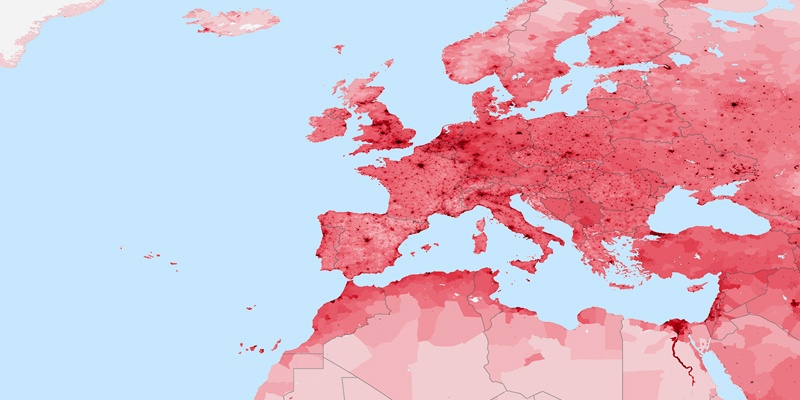
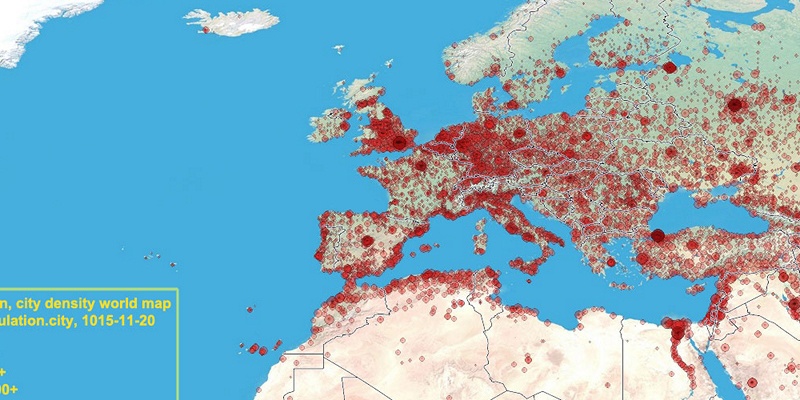
Portugal population map

City density [2]population density [3]Legend (Click on marker to hide it)
• Population Growth rate: -124 / day = -5.16 / hour = -0.086 / minute = -0.0014 / seconds
• Births Growth rate**: 177 / day = 7.36 / hour = 0.119 / minute = 0.0025 / seconds
• Deaths Growth rate: 301 / day = 12.56 / hour = 0.209 / minute = 0.0035 / seconds.

Current Portugal population by age and sex for 2026-09-11*

  Male % Female
0-4 168 838 ⇐+16.5% 144 899
5-9 190 300 ⇐+0.9% 188 670
10-14 226 910 ⇐+3.9% 218 481
15-19 262 626 ⇐+5% 250 145
20-24 256 813 +2.6%⇒ 263 542
25-29 208 047 +6.6%⇒ 221 826
30-34 190 319 +8.2%⇒ 205 994
35-39 253 549 +10.4%⇒ 280 031
40-44 375 814 +10.7%⇒ 416 123
45-49 392 208 +9.8%⇒ 430 603
50-54 348 091 +13.5%⇒ 394 964
55-59 364 451 +15.2%⇒ 420 018
60-64 314 450 +17.4%⇒ 369 181
65-69 302 123 +20.1%⇒ 362 977
70-74 260 333 +23.9%⇒ 322 453
75-79 179 367 +34.7%⇒ 241 657
80-84 144 693 +38%⇒ 199 711
85-89 104 138 +60%⇒ 166 600
90-94 54 445 +119.3%⇒ 119 379
95-99 6 223 +202.9%⇒ 18 849
100+ 491 +397.6%⇒ 2 443

Sources: [1]

Ads

age of mother

Childrens per woman

Life expectancy at birth

First letter of the City


Filter by starting letters of the city (132 cities):
A (16) | B (7) | C (12) | E (6) | F (6) | G (3) | I (1) | L (9) | M (13) | O (9) | P (14) | R (2) | S (14) | T (6) | V (14) |

Population for cities or regions in Portugal (132)

This is not full list. Only 50 largest cities in alphabetical order. You can click on start letter of the city ↑ :
Alcobaça Centro
Almada Lisboa
Amadora Lisboa
Amarante Norte
Aveiro Centro
Barcelos Norte
Barreiro Lisboa
Braga Norte
Cascais Lisboa
Castelo Branco Centro
Coimbra Centro
Évora Evora Alentejo
Faro Algarve
Felgueiras Norte
Figueira da Foz Figueira da Foz Municipality Centro
Funchal R.A. Madeira
Gondomar Norte
Guimarães Norte
Leiria Centro
Lisbon Lisboa
Loulé Algarve
Loures Lisboa
Mafra Lisboa
Maia Norte
Matosinhos Matosinhos Municipality Norte
Moita Lisboa
Odivelas Lisboa
Oeiras Lisboa
Oliveira de Azeméis Norte
Paços de Ferreira Norte
Palmela Lisboa
Paredes Norte
Penafiel Norte
Ponta Delgada R.A. Açores
Porto Norte
Póvoa de Varzim Norte
Santa Maria da Feira Norte
Santarém Alentejo
Santo Tirso Norte
Seixal Lisboa
Setúbal Lisboa
Sintra Lisboa
Torres Vedras Centro
Valongo Norte
Viana do Castelo Norte
Vila do Conde Norte
Vila Franca de Xira Lisboa
Vila Nova de Famalicão Norte
Vila Nova de Gaia Norte
Viseu Centro

Sources, Notices

* Value is calculated with linear interpolation from 2 nearest estimated (date->population) data (unofficial).
** Net migration is included in Births with this calculation: Births = Population[1] + Deaths[1].
*** For years before 1950 we dont have population data. Value is approximate calculation using function: 1900 population = 70% of 1950 population.
[1] United Nations, Department of Economic and Social Affairs, Population Division (2015). World Population Prospects: The 2015 Revision. Data are estimates and projections according to a medium-fertility variant. Reused with the permission of the United Nations. Downloaded: 2015-11-15 (un.org)
[2] City density map, generated by population.city using data provided to us by 1km.net website. Every circle is city with population over 5000. Link
[3] Population density map generated by instructions from daysleeperrr on reddig. Link1. Used data source is the Gridded Population of the World (GPW), v3 online at the the Socioeconomic Data and Applications Center (SEDAC) at Columbia University. Link2. Additional urban land cover: Extracted from Global Land Cover Characteristics Data Base Version 2.0 and Binary MOD12Q1 data on shadedrelief.com. Link3 (PNG,0.5Mb).