Austria · Population

On this page you can find past, current and future population statistics for Austria (from 1950-2100), population map, demographics, live population counter etc. . Question: What is the population of Austria? Answer: Current population of Austria is: 8 823 264*[1], area 83858 km², population density 105.22 p/km². Capital of Austria is Vienna. Continent: Europe.

↓ Population for cities ↓   → Administrative units →

Austria · Population 1950-2100

Austria · historical and predicted populations (both sexes) for the period 1950-2100 (millions) De facto population in Austria as of 1 July of the year indicated. Source United Nations Population Division [1].

What was the Austria population at your birthday?*

Enter your birth date to find out. [1]

year:***
month:
day:

Current Austria population

8 823 264

Today This year
Population growth Today
xx
Changes every 1262.522 sec.
Population growth This year
xx
Births Today
xx
Changes every 296.385 sec.
Births This year
xx
Deaths Today
xx
Changes every 387.309 sec.
Deaths This year
xx

Sources: [1]
Today's statistic since midnight 00:00.
This year, statistic changes since 1st January
Population = Births** - Deaths

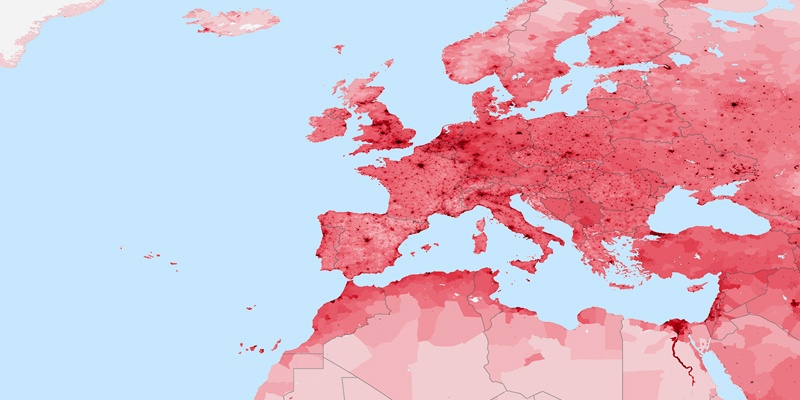
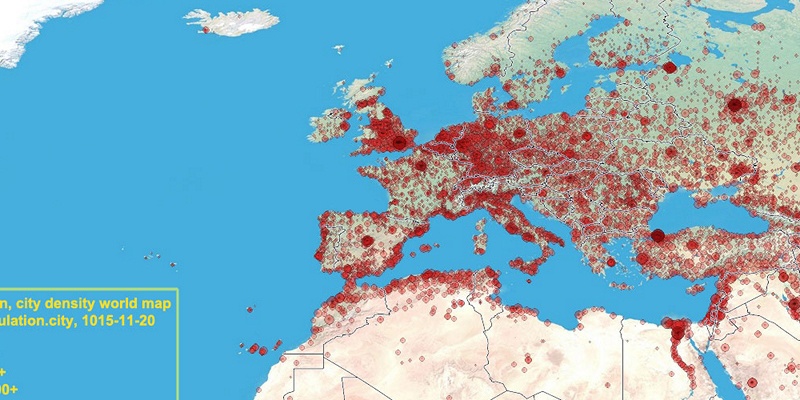
Austria population map

City density [2]population density [3]Legend (Click on marker to hide it)
• Population Growth rate: 68 / day = 2.85 / hour = 0.048 / minute = 0.0008 / seconds
• Births Growth rate**: 291 / day = 12.19 / hour = 0.205 / minute = 0.0036 / seconds
• Deaths Growth rate: 223 / day = 9.29 / hour = 0.155 / minute = 0.0026 / seconds.

Current Austria population by age and sex for 2026-08-24*

  Male % Female
0-4 231 957 ⇐+4.5% 221 884
5-9 209 280 ⇐+8.4% 193 039
10-14 188 202 ⇐+6.3% 177 033
15-19 171 850 +0.9%⇒ 173 361
20-24 227 973 ⇐+1.7% 224 234
25-29 294 222 ⇐+7.8% 272 909
30-34 324 119 ⇐+11.2% 291 556
35-39 304 458 ⇐+11.6% 272 711
40-44 187 476 +9.4%⇒ 205 093
45-49 255 291 +17.9%⇒ 301 080
50-54 410 214 ⇐+1.2% 405 360
55-59 435 609 ⇐+8.7% 400 708
60-64 317 286 ⇐+0.7% 315 107
65-69 176 874 +14.8%⇒ 202 988
70-74 202 162 +13.3%⇒ 229 069
75-79 219 068 +14.4%⇒ 250 715
80-84 116 234 +19.3%⇒ 138 663
85-89 58 582 +17.2%⇒ 68 660
90-94 41 943 +76%⇒ 73 840
95-99 5 222 +392.7%⇒ 25 728
100+ 245 +413.1%⇒ 1 257

Sources: [1]

Ads

age of mother

Childrens per woman

Life expectancy at birth

First letter of the City


Filter by starting letters of the city (86 cities):
A (2) | B (8) | D (2) | E (3) | F (2) | G (7) | H (5) | I (2) | J (1) | K (8) | L (8) | M (3) | N (1) | P (1) | R (2) | S (12) | T (6) | V (5) | W (6) | Z (2) |

Population for cities or regions in Austria (86)

This is not full list. Only 50 largest cities in alphabetical order. You can click on start letter of the city ↑ :
Amstetten Lower Austria
Ansfelden Upper Austria
Bad Ischl Upper Austria
Baden Baden bei Wien Lower Austria
Bludenz Vorarlberg
Braunau am Inn Upper Austria
Bregenz Vorarlberg
Bruck an der Mur Styria
Dornbirn Vorarlberg
Eisenstadt Burgenland
Feldkirch Vorarlberg
Feldkirchen in Kärnten Carinthia
Gmunden Upper Austria
Graz Styria
Hall in Tirol Tyrol
Hallein Salzburg
Hohenems Vorarlberg
Innsbruck Tyrol
Kapfenberg Styria
Klagenfurt am Wörthersee Klagenfurt Carinthia
Klosterneuburg Lower Austria
Knittelfeld Styria
Krems an der Donau Krems Lower Austria
Kufstein Tyrol
Leoben Styria
Leonding Upper Austria
Lienz Tyrol
Linz Upper Austria
Lustenau Vorarlberg
Mödling Lower Austria
Perchtoldsdorf Lower Austria
Saalfelden am Steinernen Meer Salzburg
Salzburg Salzburg
Sankt Pölten Sankt Polten Lower Austria
Sankt Veit an der Glan Carinthia
Schwaz Tyrol
Schwechat Lower Austria
Spittal an der Drau Carinthia
Steyr Upper Austria
Stockerau Lower Austria
Telfs Tyrol
Ternitz Lower Austria
Traiskirchen Lower Austria
Traun Upper Austria
Tulln Lower Austria
Vienna Vienna
Villach Carinthia
Wels Upper Austria
Wiener Neustadt Lower Austria
Wolfsberg Carinthia

Sources, Notices

* Value is calculated with linear interpolation from 2 nearest estimated (date->population) data (unofficial).
** Net migration is included in Births with this calculation: Births = Population[1] + Deaths[1].
*** For years before 1950 we dont have population data. Value is approximate calculation using function: 1900 population = 70% of 1950 population.
[1] United Nations, Department of Economic and Social Affairs, Population Division (2015). World Population Prospects: The 2015 Revision. Data are estimates and projections according to a medium-fertility variant. Reused with the permission of the United Nations. Downloaded: 2015-11-15 (un.org)
[2] City density map, generated by population.city using data provided to us by 1km.net website. Every circle is city with population over 5000. Link
[3] Population density map generated by instructions from daysleeperrr on reddig. Link1. Used data source is the Gridded Population of the World (GPW), v3 online at the the Socioeconomic Data and Applications Center (SEDAC) at Columbia University. Link2. Additional urban land cover: Extracted from Global Land Cover Characteristics Data Base Version 2.0 and Binary MOD12Q1 data on shadedrelief.com. Link3 (PNG,0.5Mb).